What is happening
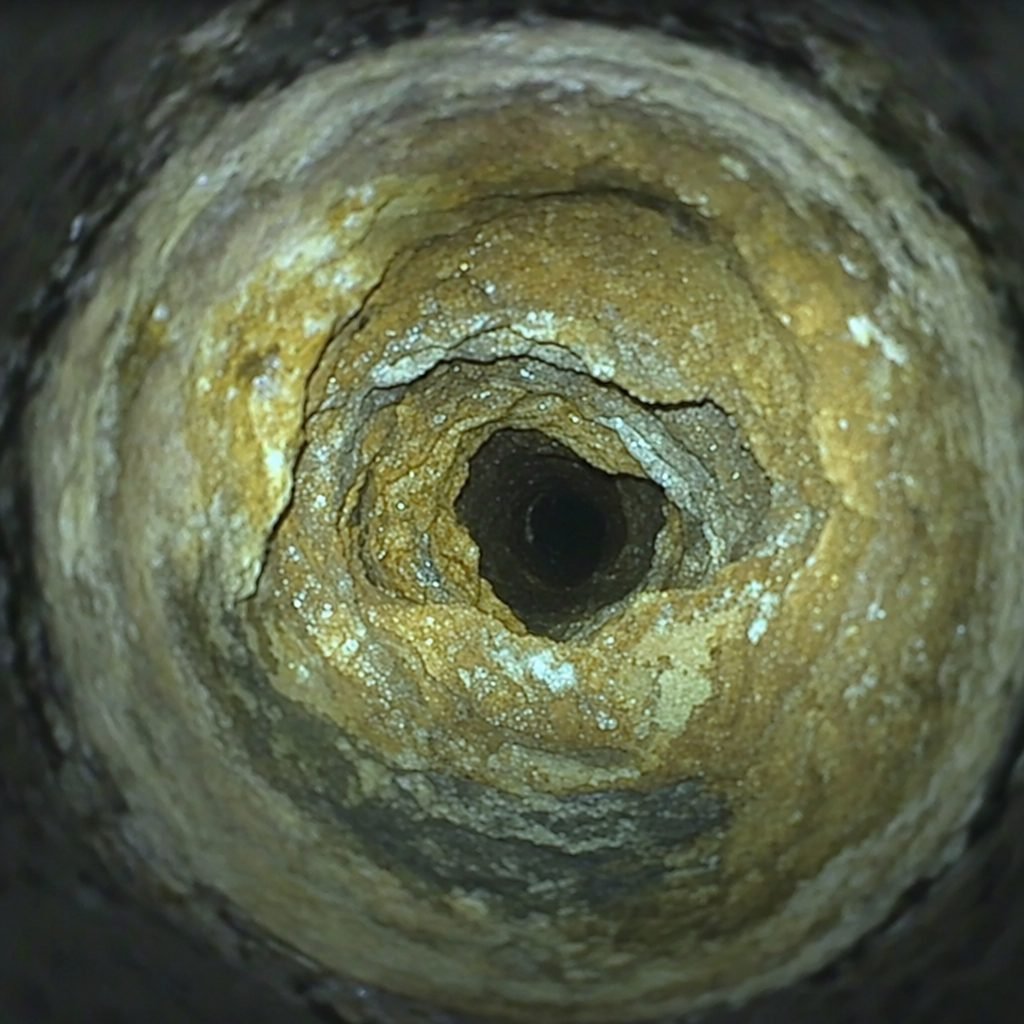
Kitchen lines fail in a specific way: grease cools, sticks and builds inward until the pipe is a fraction of its original size.
Drains report problems indirectly. The fixture showing the symptom is often not where the trouble is, which is why the useful first question is not what is blocked but which fixtures are affected and when.
What usually causes it
In this area, four explanations cover most cases:
- Grease and soap film built up on the pipe wall
- Food waste caught on an already rough surface
- A long horizontal run with a shallow fall
- Scale in an older cast iron branch
Which one applies changes the fix entirely, and they are not distinguishable from inside the house. We would want to see it before saying anything for certain.
What you can check yourself
Run the fixtures one at a time and note which ones react to each other. Two drains that respond to one another share a pipe, and that narrows things considerably.
Note whether it is getting worse gradually or started suddenly. Gradual usually means the pipe has been closing up for a long time. Sudden usually means something specific is in the way.
Narrowing it down
Ask how long it has been getting worse. Months to years means coating on the wall. Days means something specific has lodged. Those have different fixes and the first one does not respond well to the second one’s treatment.
What guessing costs
Cabling a coated kitchen line works for a few weeks and then does not. Paying for that repeatedly is the most common avoidable drain expense we see.
When it is worth calling
If it has happened before, it is worth finding the cause rather than clearing it again. A drain that has been opened twice and returned twice will return a third time.
On this particular pattern, hydro jetting is the service that most often resolves it, though we would confirm that by looking rather than by assuming.