Why cast iron closes rather than blocks
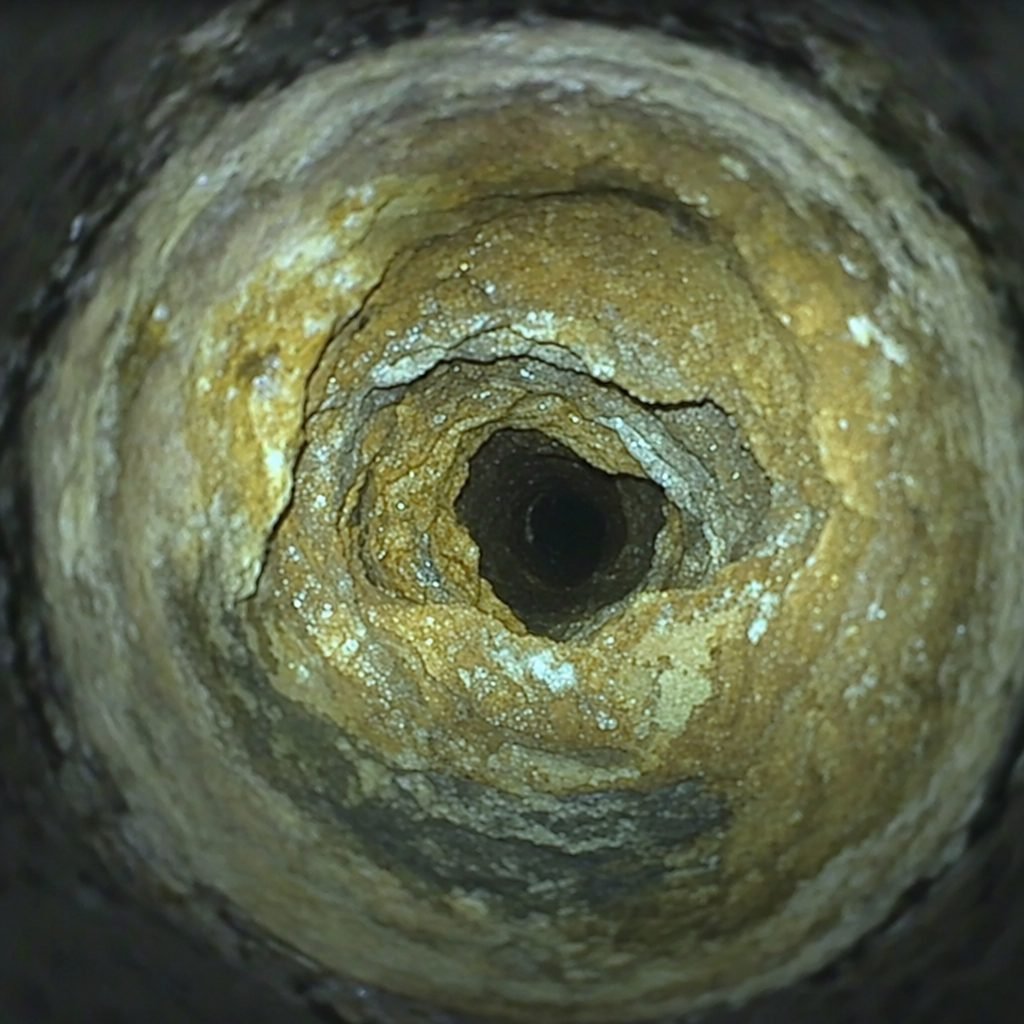
Cast iron corrodes from the inside. Rust builds outward from the pipe wall, hard water leaves mineral scale on top of it, and the two together grow inward over decades until the opening is a fraction of the original bore.
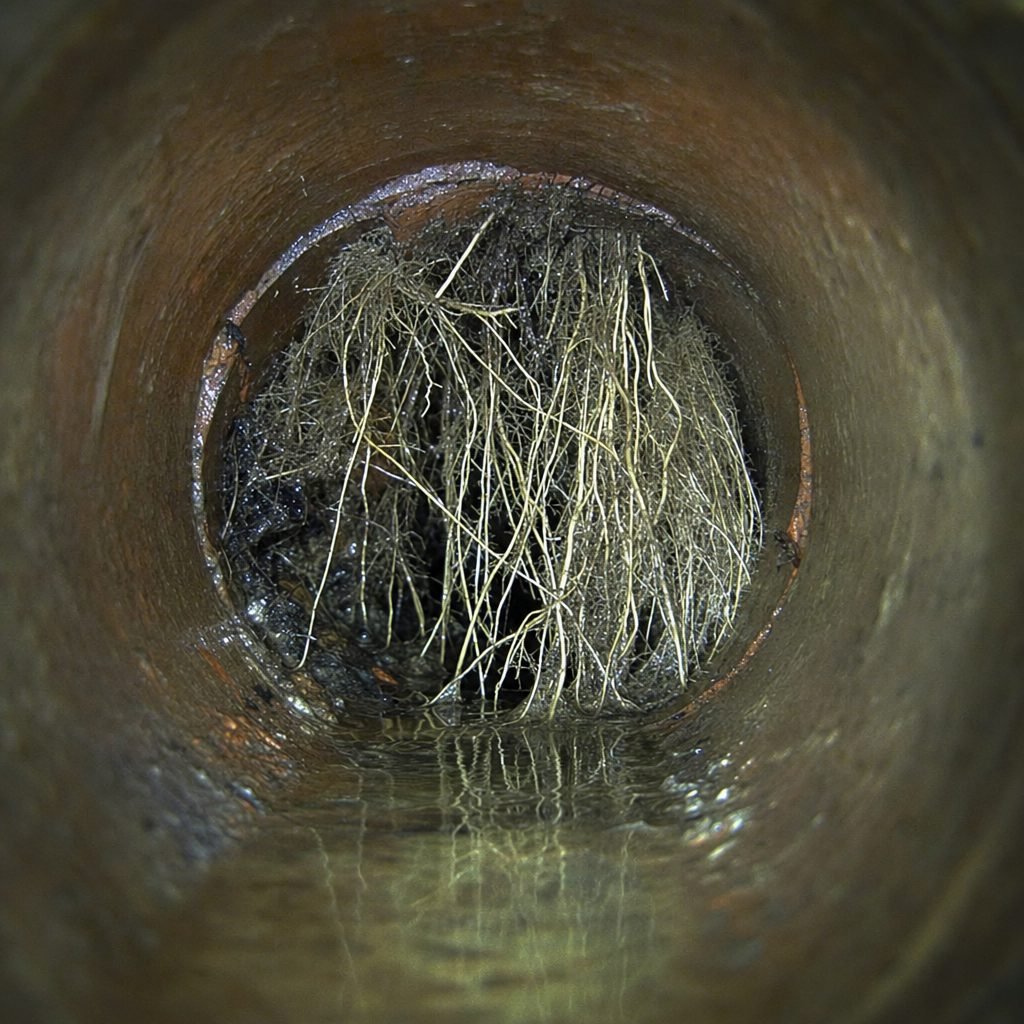
The result rarely presents as a blockage. It presents as a drain that has been slow for as long as anyone remembers, which is why it so often goes unaddressed.
Why this is common in Northern Utah
Two things line up here. A lot of local housing was built between the 1940s and the 1960s, so the cast iron in it has had seventy years or more to corrode. And Wasatch Front water is hard, which accelerates scale.
A house in Washington Terrace or Roy with its original drain lines is close to the textbook case for this.
What descaling involves
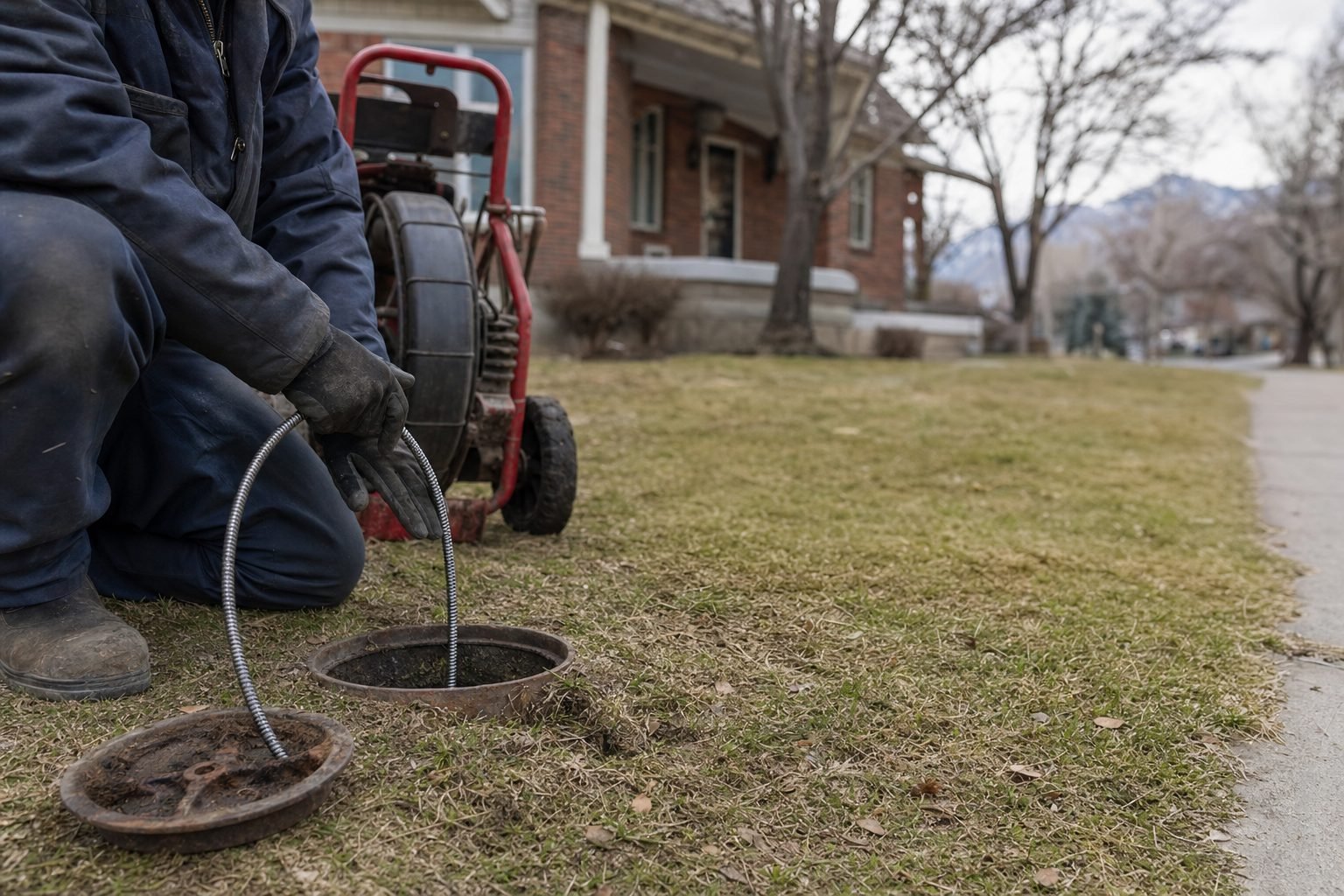
A chain knocker or a similar cutting head is run through the line to take the scale back to bare metal, restoring the original diameter. It is more aggressive than cabling and slower than jetting, and on the right pipe it makes a substantial difference.
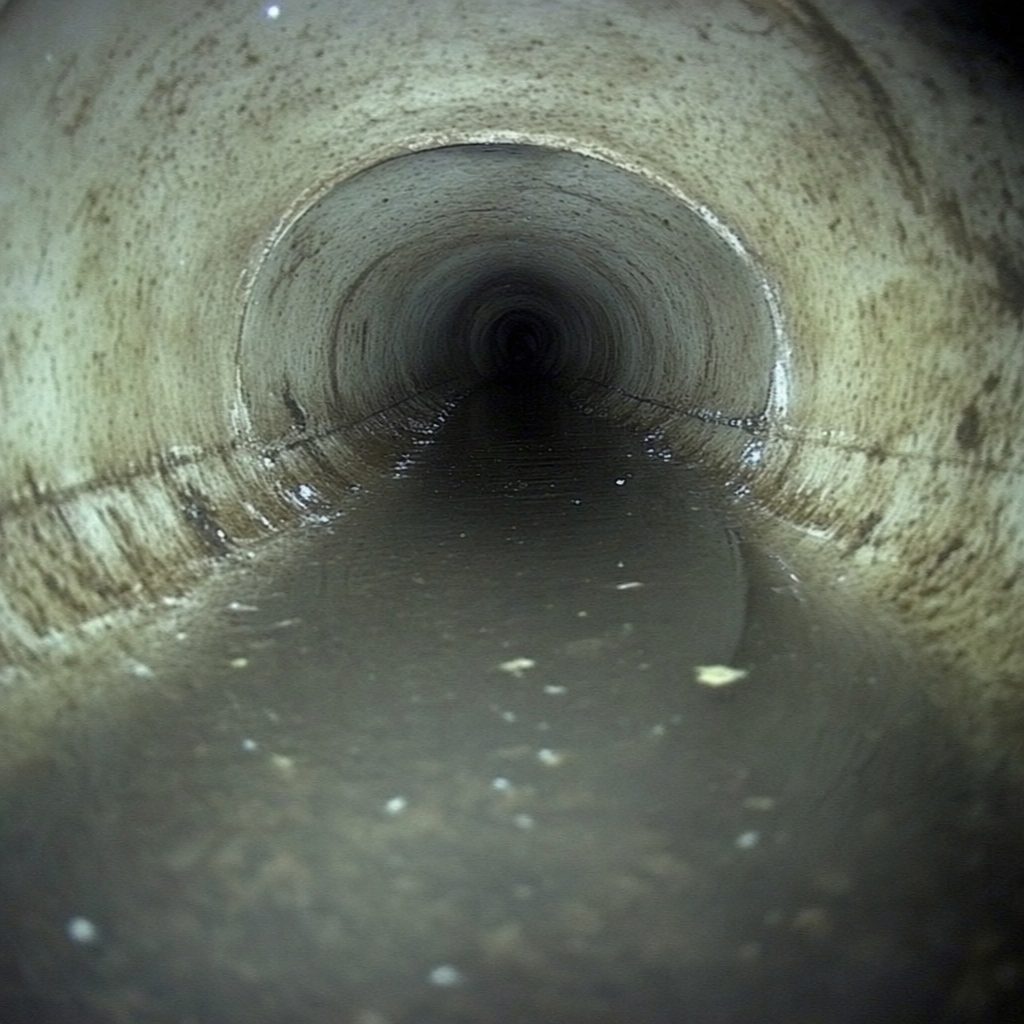
It is not appropriate for every cast iron line. Where the wall has thinned badly, removing scale can expose how little sound metal is left. The camera pass beforehand is what tells us which situation we are in.
How to tell if this is your situation
Age of the house is the first indicator. Anything built in this area before roughly 1970 is a candidate. The second is the symptom: a drain that has been slow for years without ever fully blocking is far more likely to be scale than a clog.
What it costs and why quotes differ
Price follows length and severity. Two companies can quote very differently on the same line because they are proposing to descale different amounts of it. It is worth asking what length is included before comparing numbers.
When we will tell you not to
Where the wall has thinned badly, the scale may be doing structural work. Removing it can reveal how little sound metal is left. That is a judgement made from the camera footage before the work, and if that is what we see we will say so rather than proceed.