Skip to content
(801) 643-5784 (801) 643-5784

Drain and sewer cleaning

Main Line Drain Cleaning in Ogden, Utah

When more than one fixture backs up at once, the problem is almost never the fixture. It is the line they share.

Check my symptom (801) 643-5784

When this is the answer

01

Several fixtures backing up at once

The restriction is below where their branches meet, which puts it in the main.

02

A basement floor drain overflowing

It sits lowest, so it takes the overflow when the main cannot keep up.

03

Gurgling in one fixture when another drains

Air being pulled through standing water in a shared line.

04

Waste appearing at the lowest fixture in the house

A classic main line signature rather than a fixture problem.

Drains and sewers only

Not a plumbing company with a drain page. This is the whole job.

A camera on recurring calls

If a drain has backed up before, guessing at it twice is not a plan.

Northern Utah homes

Cast iron, clay lateral, hard water scale, roots. The local failure modes.

How to tell it is the main

One slow fixture is usually that fixture’s own branch. Several at once is the line they share. If a toilet, a tub and a basement floor drain are all misbehaving, the restriction sits below the point where those lines meet.

The floor drain is the useful witness. It sits lowest, so it takes the overflow first and tends to show a main line problem before anything upstairs does.

What we find in main lines here

In older Ogden and Davis County housing, the common findings are roots at a clay joint, scale in cast iron, and bellies where a section has settled. Occasionally a break, though genuine collapse is less common than the frequency of the quote would suggest.

Which of those you have changes the fix completely, and they are not distinguishable from inside the house. That is the argument for looking.

Getting it open, then keeping it open

On a main that is actively backing up, the first job is flow. Nobody wants a diagnosis while waste water is in the basement.

Once it is open, the question worth answering is why it closed. If the answer is grease or scale, cleaning the wall properly is what stops it returning. If the answer is a structural fault, cleaning will not hold and we will tell you that rather than book you in again in six weeks.

Access is most of the job

Main line work happens at a cleanout. Where one exists and is reachable, the work is straightforward. Where a property has none, or it is buried, locating or creating access is the part that takes the time and moves the cost.

Why we look on recurring calls

A main that has blocked twice will block a third time unless something changed. Roots, scale, a belly and a break all present identically from inside the house and need completely different responses, and the only way to tell them apart is to look.

What we will tell you afterwards

Where the restriction was, how far from the house, and what caused it. If the answer is that the pipe is sound and it was grease, that is the answer, and it is a considerably cheaper one than the alternative.
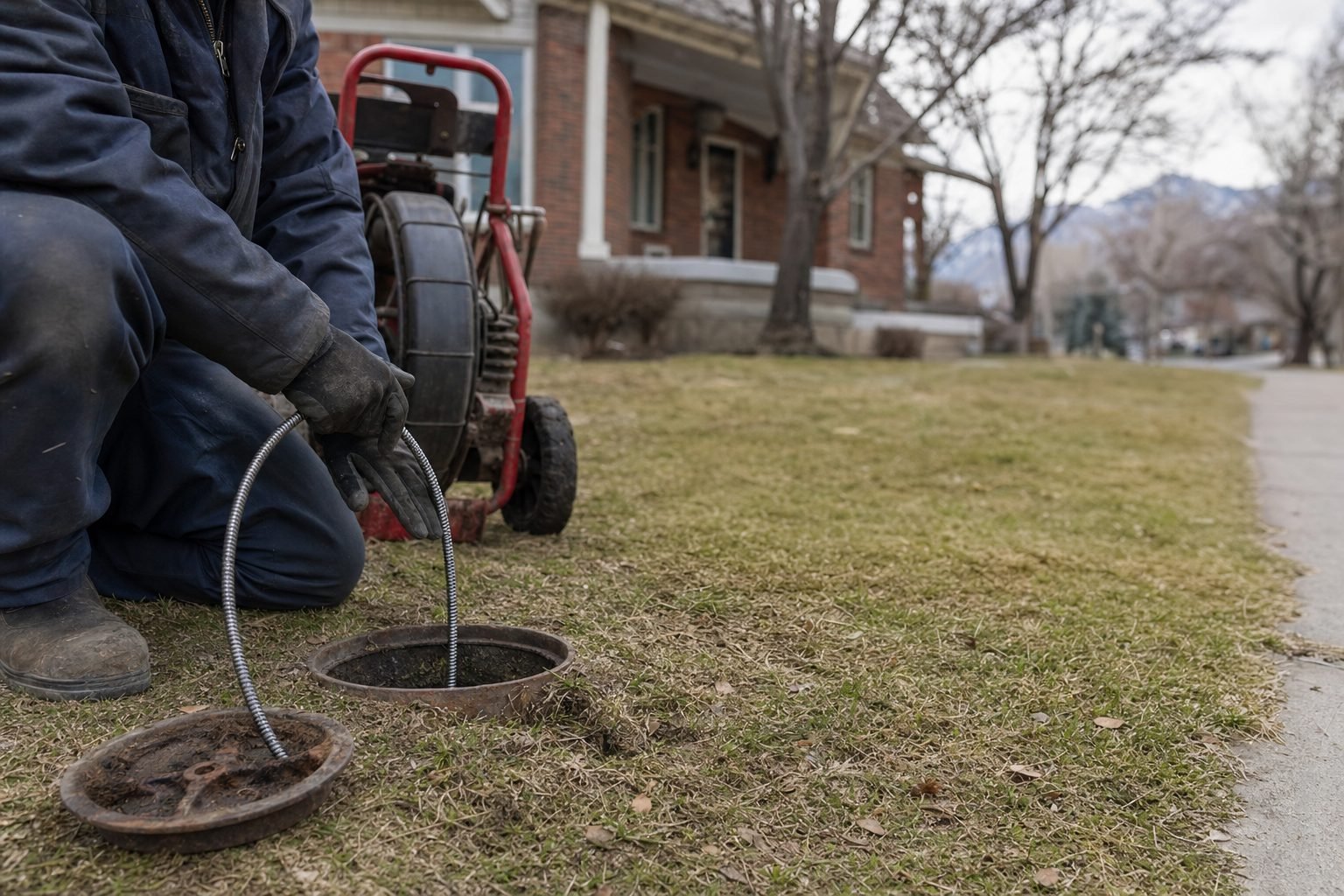
A drain technician feeding a cable into an open sewer cleanout in the front lawn of an older Ogden home.

Look first. Then clear it.

Most drain calls run the same four steps. The order matters: everything we recommend comes after we have seen the line, not before.

  1. 01

    Ask

    What is the drain doing, which fixtures are affected, how old is the house, has it happened before. Five minutes on the phone usually narrows it to two possibilities.

    You get a straight answer about whether this needs a visit.

  2. 02

    Look

    On anything recurring, the camera goes in before the cable does. We find where the restriction is and what is causing it.

    You watch the same screen we do.

  3. 03

    Clear

    Cable, jetter or descaler, chosen for what we actually found. Grease gets cut out, not punched through.

    The line is open, and the cause is gone with it.

  4. 04

    Show

    A second camera pass after the work, so you can see the pipe you are left with, including when the answer is that nothing is wrong with it.

    You know the condition of your line, not just that the water moved.

What the camera actually shows

You watch the same screen we do. These are the three things we find most often behind a drain that will not stay clear.

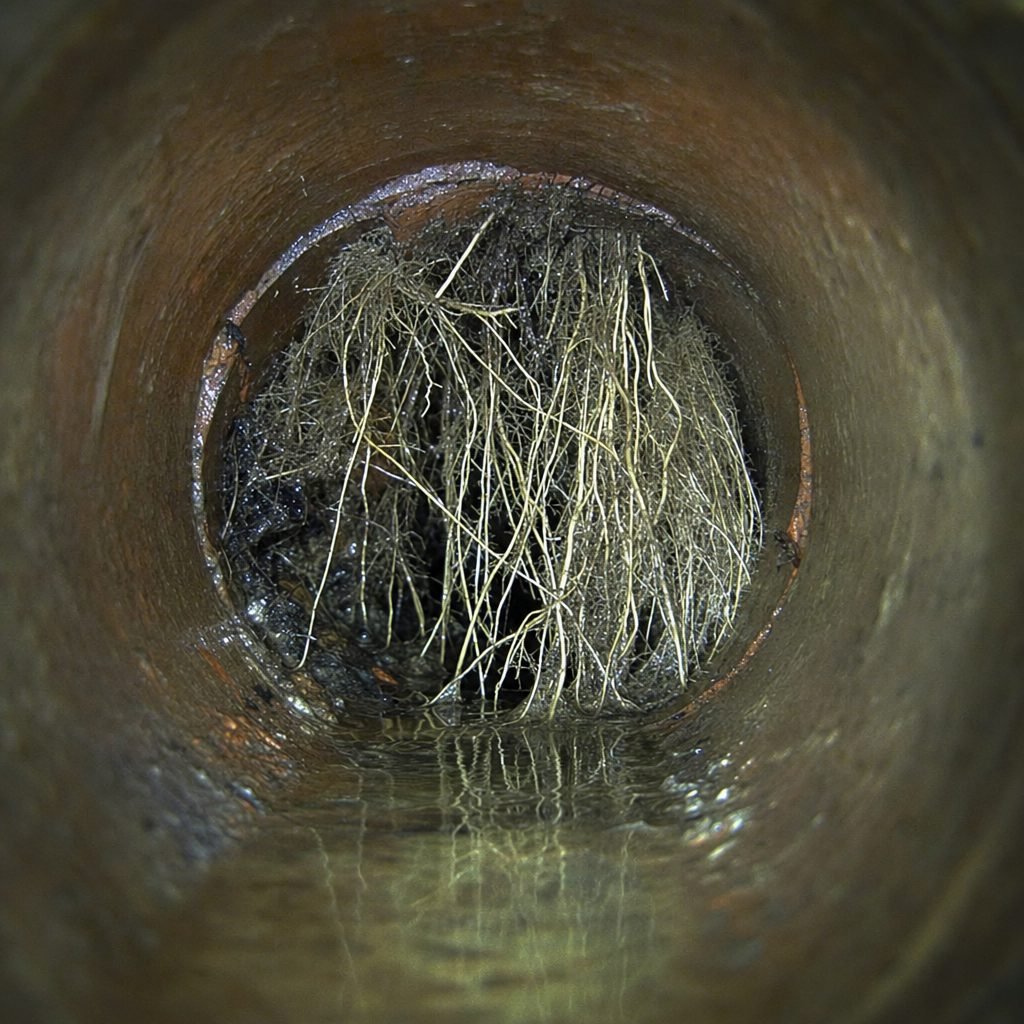
Root intrusion. Roots at a clay joint. Common under mature trees on Ogden's older streets.
Root intrusion Roots at a clay joint. Common under mature trees on Ogden's older streets.
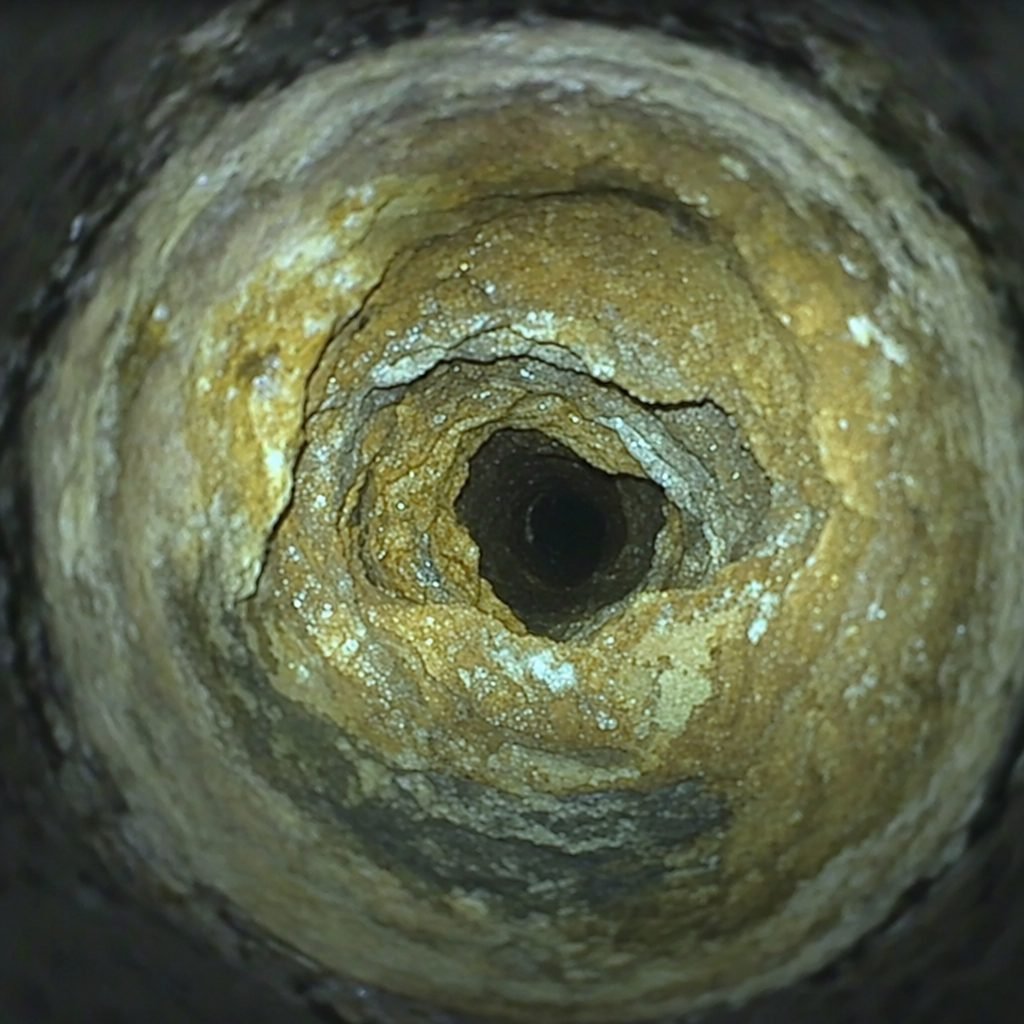
Mineral scale. Cast iron closed down by hard water scale. Regularly mistaken for a clog.
Mineral scale Cast iron closed down by hard water scale. Regularly mistaken for a clog.
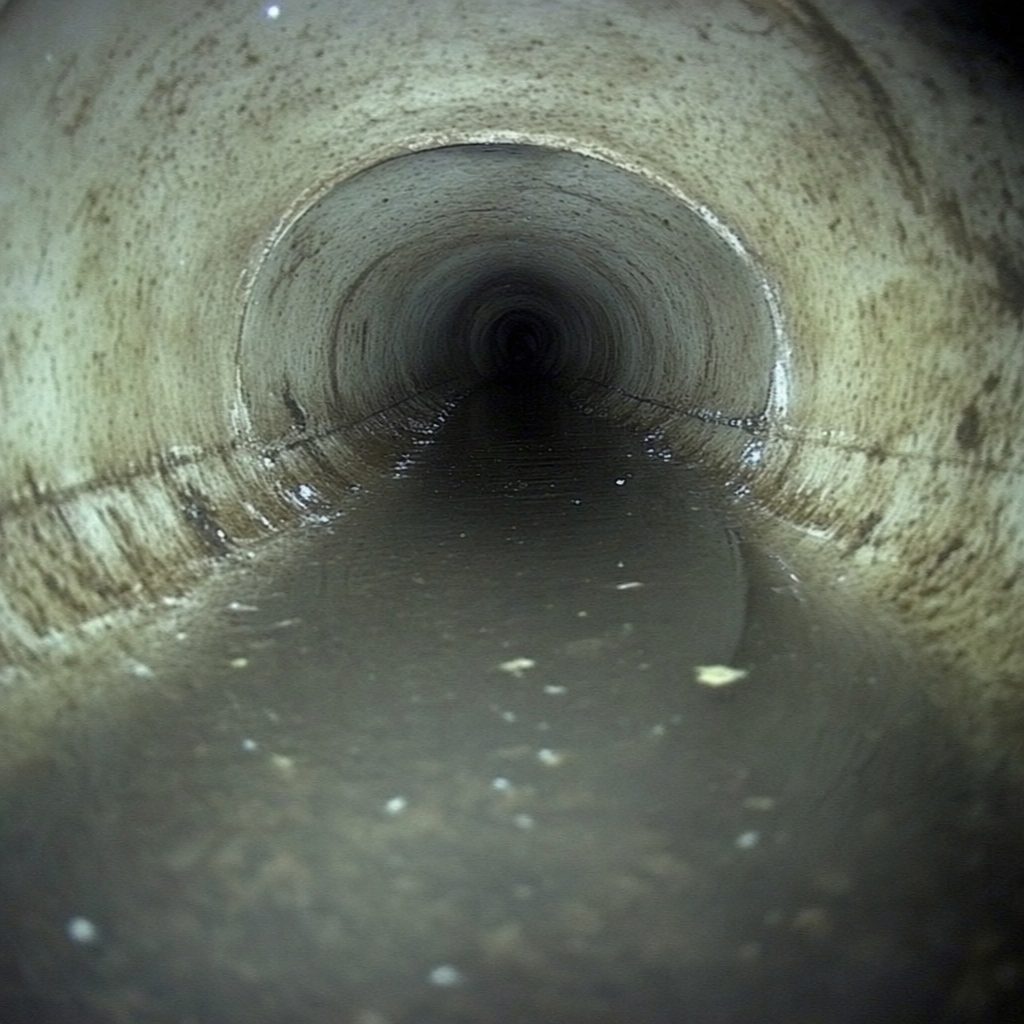
A belly in the line. A low section holding water. It will keep catching waste until it is corrected.
A belly in the line A low section holding water. It will keep catching waste until it is corrected.

Questions we get asked

How do I know it is the main and not one drain?

Count the fixtures. One is usually a branch problem. Two or more sharing a run points at the main.

Where does the work happen?

At a cleanout, normally outside or in the basement. If a property has no accessible cleanout we will discuss options before starting.

Will you need to dig?

Not for cleaning. Digging only comes up if the camera shows a structural fault, and you would see that footage before anything was decided.

How long does it take?

Most main line clearings are done within a couple of hours. A camera pass afterwards adds time and is usually worth it on a recurring problem.

What if it is the city's line, not mine?

Responsibility usually stops at the connection to the main, though the detail varies by municipality. If the problem is on the city side we will tell you that and you should not be paying us to fix it.

Not sure if this is what you have?

Tell us what the drain is doing. We will tell you what usually causes that pattern before you commit to anything.

What is the drain doing?

What is the drain doing?

Worth saying up front. If the pipe turns out to be healthy, we will tell you that. We do not turn a drain cleaning call into a sewer replacement pitch.

Backing up right now? (801) 643-5784

What we do when the pipe is fine

No fault found

Sometimes the camera goes down a line that has backed up three times and finds nothing wrong with the pipe. Grease, or roots at one joint, or a fixture that was never vented properly. The pipe itself is sound.

When that happens we clean it properly, tell you what caused it, and leave. That is the whole visit. A recurring clog is not evidence that a sewer needs replacing, and we are not going to say it is.

Tell us what the drain is doing

Describe the symptom and we will tell you what usually causes it. If it needs a look, we will come and look.

No call-out pressure and no sewer replacement pitch. If cleaning is the fix, cleaning is what we quote.

HoursMonday to Saturday, 7am to 7pm
Based inOgden, Utah
License #14290593-5501
Call Check my symptom