Skip to content
(801) 643-5784 (801) 643-5784

Guide

Cable or Hydro Jetting: Which Your Drain Actually Needs

They solve different problems. Using the wrong one costs money and leaves the cause in the pipe.

Check my symptom (801) 643-5784

Drains and sewers only

Not a plumbing company with a drain page. This is the whole job.

A camera on recurring calls

If a drain has backed up before, guessing at it twice is not a plan.

Northern Utah homes

Cast iron, clay lateral, hard water scale, roots. The local failure modes.

What a cable does

A cable is a steel spring pushed down the line, usually with a cutting head on the end. It bores through whatever is blocking the pipe and restores flow. It is fast, it is cheap, and for a one-off blockage it is often exactly the right tool.

What a jetter does

A jetter puts water through the line at pressure and pulls it back along the pipe, cutting build-up off the wall and flushing it out. It cleans the pipe rather than making an opening in what is inside it.

The practical difference

Picture a pipe with a centimetre of grease coating the inside. A cable makes a hole through the grease. Water flows again, and the customer is satisfied. The grease is still there, and over the following weeks it closes the hole. A jetter removes the grease.

Which one you need

If the drain has blocked once and never before, a cable is usually enough and the cheaper option is the right one. If it keeps returning, the cable has been treating the symptom, and continuing to pay for it is the expensive choice over time.

What it costs you to get this wrong

Cabling is cheaper per visit. If a line needs jetting and gets cabled four times instead, four cheap visits cost more than one correct one, and the pipe spends the whole year mostly closed. The cheaper option is only cheaper when it is the right option.

How to tell which you are being sold

Ask what will be done about the pipe wall. If the answer is only about clearing the blockage, that is a cable job, and it is worth asking whether the blockage is the actual problem or the symptom of one.

Where each one struggles

A cable is close to useless against a wall coated evenly in scale, because there is nothing discrete for it to catch. A jetter is the wrong tool for a solid obstruction like a lodged object, and it is the wrong tool entirely for a pipe that has lost integrity.

What we would ask you on the phone

How many times it has happened, how long it takes to come back, and roughly when the house was built. Those three answers usually settle which of the two is appropriate before anyone gets in a van.
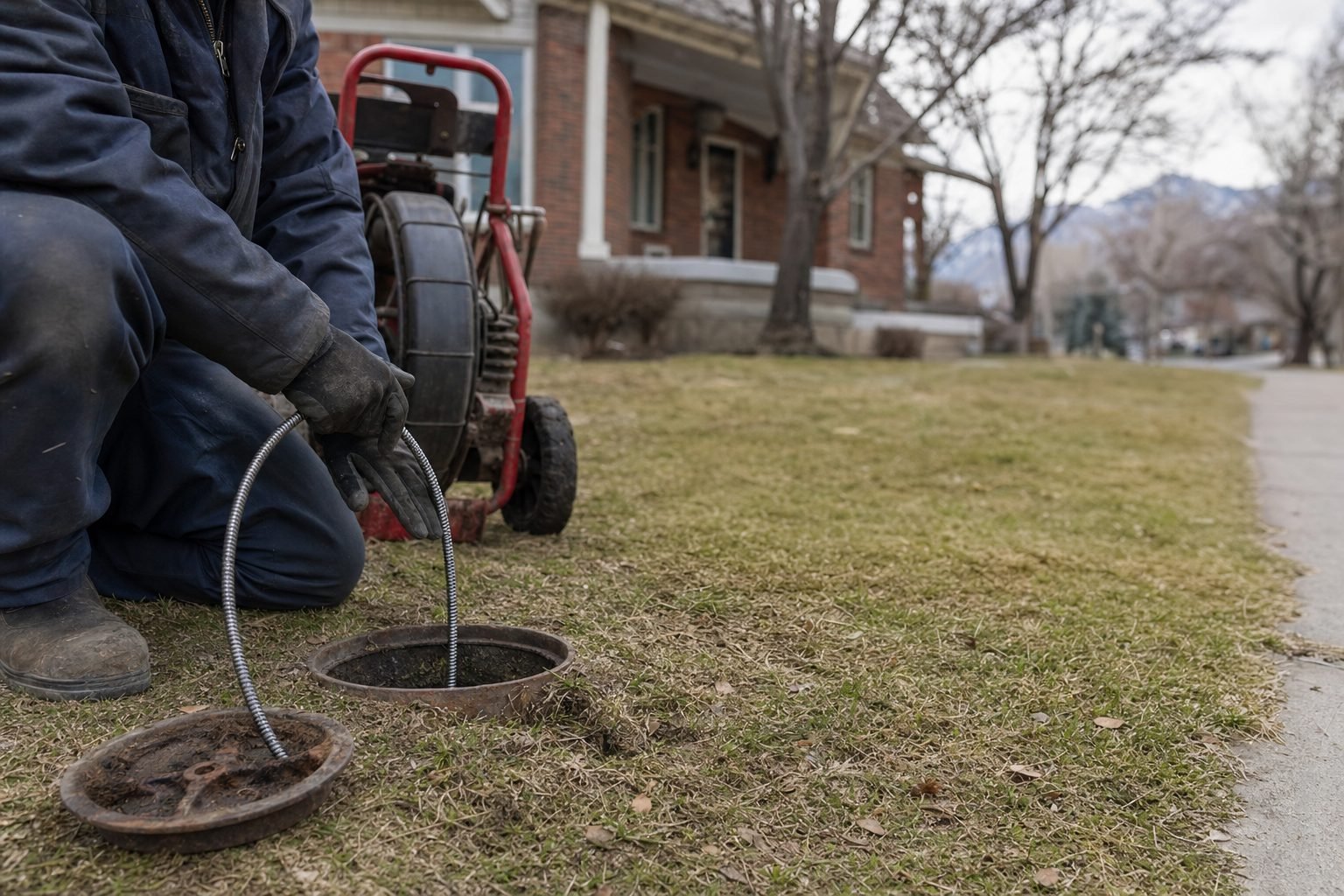
A drain technician feeding a cable into an open sewer cleanout in the front lawn of an older Ogden home.

Look first. Then clear it.

Most drain calls run the same four steps. The order matters: everything we recommend comes after we have seen the line, not before.

  1. 01

    Ask

    What is the drain doing, which fixtures are affected, how old is the house, has it happened before. Five minutes on the phone usually narrows it to two possibilities.

    You get a straight answer about whether this needs a visit.

  2. 02

    Look

    On anything recurring, the camera goes in before the cable does. We find where the restriction is and what is causing it.

    You watch the same screen we do.

  3. 03

    Clear

    Cable, jetter or descaler, chosen for what we actually found. Grease gets cut out, not punched through.

    The line is open, and the cause is gone with it.

  4. 04

    Show

    A second camera pass after the work, so you can see the pipe you are left with, including when the answer is that nothing is wrong with it.

    You know the condition of your line, not just that the water moved.

What the camera actually shows

You watch the same screen we do. These are the three things we find most often behind a drain that will not stay clear.

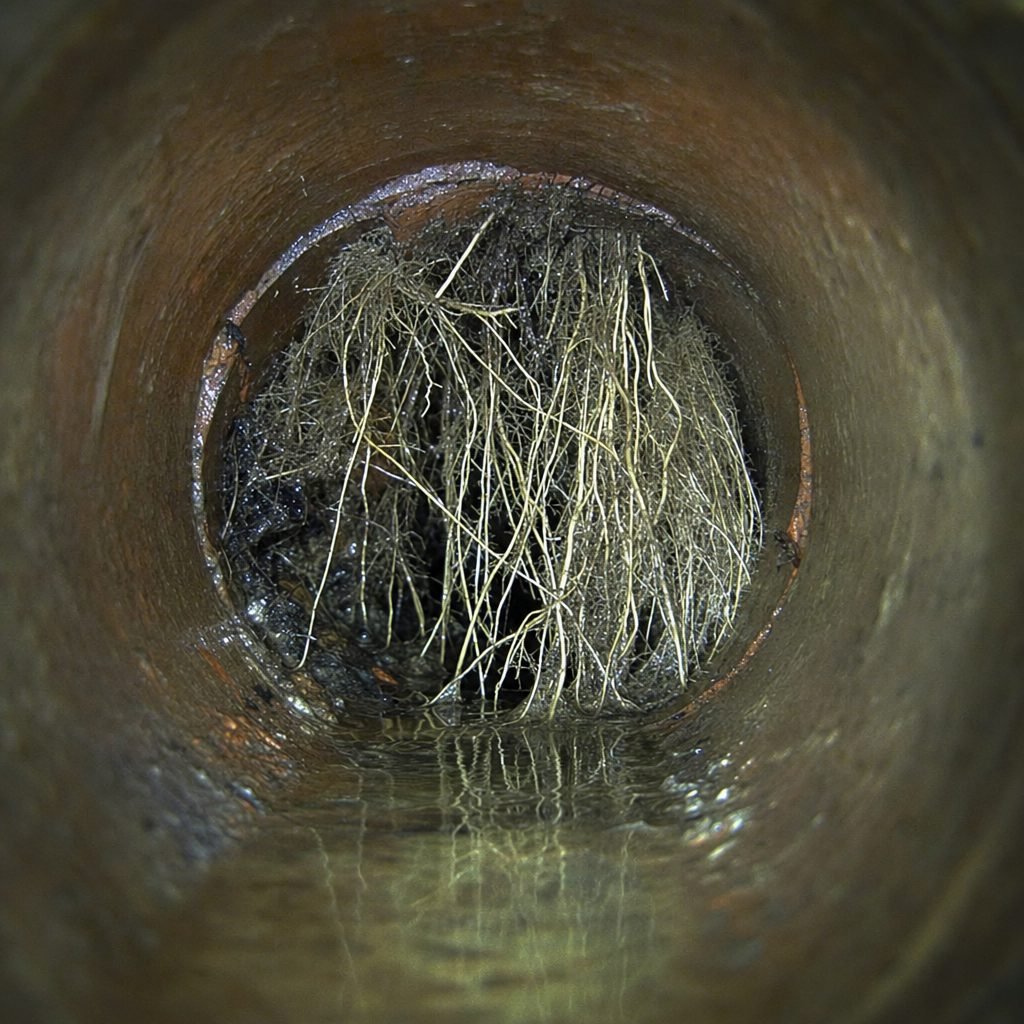
Root intrusion. Roots at a clay joint. Common under mature trees on Ogden's older streets.
Root intrusion Roots at a clay joint. Common under mature trees on Ogden's older streets.
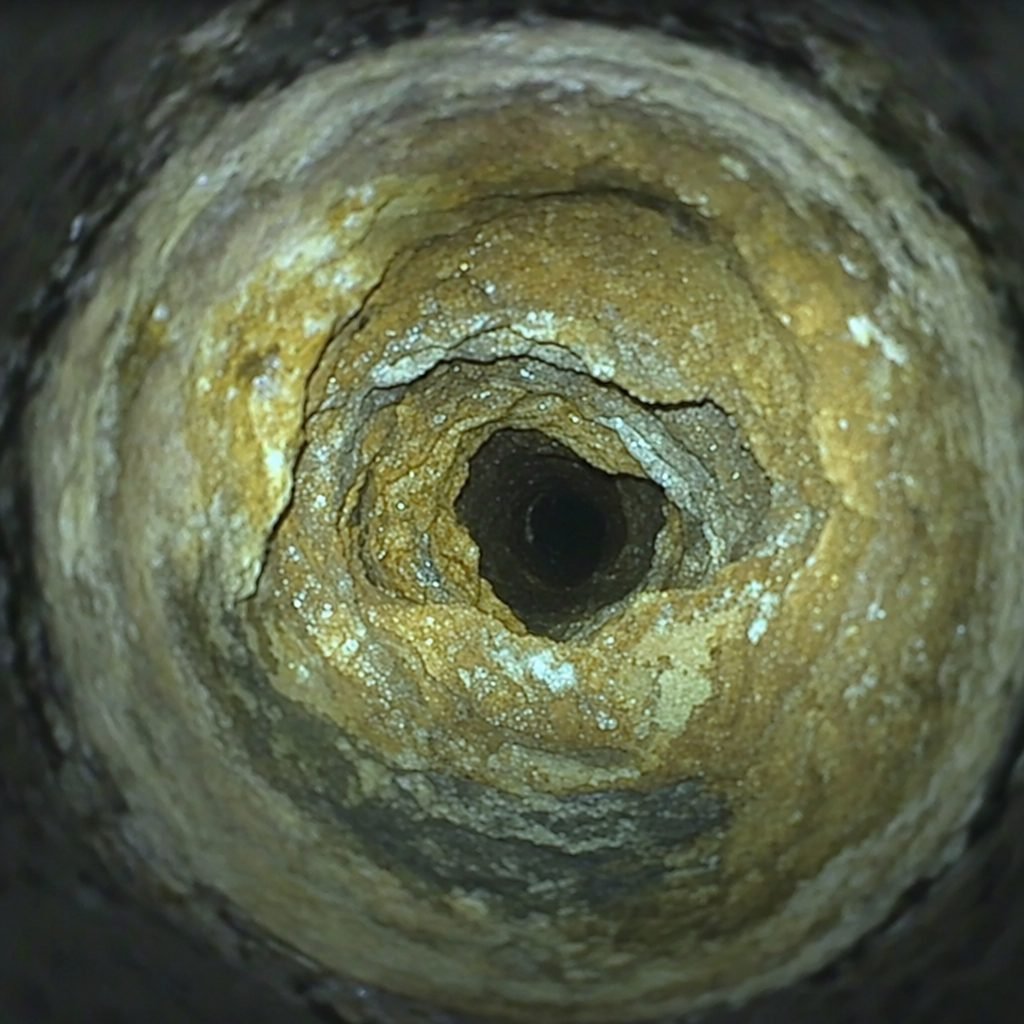
Mineral scale. Cast iron closed down by hard water scale. Regularly mistaken for a clog.
Mineral scale Cast iron closed down by hard water scale. Regularly mistaken for a clog.
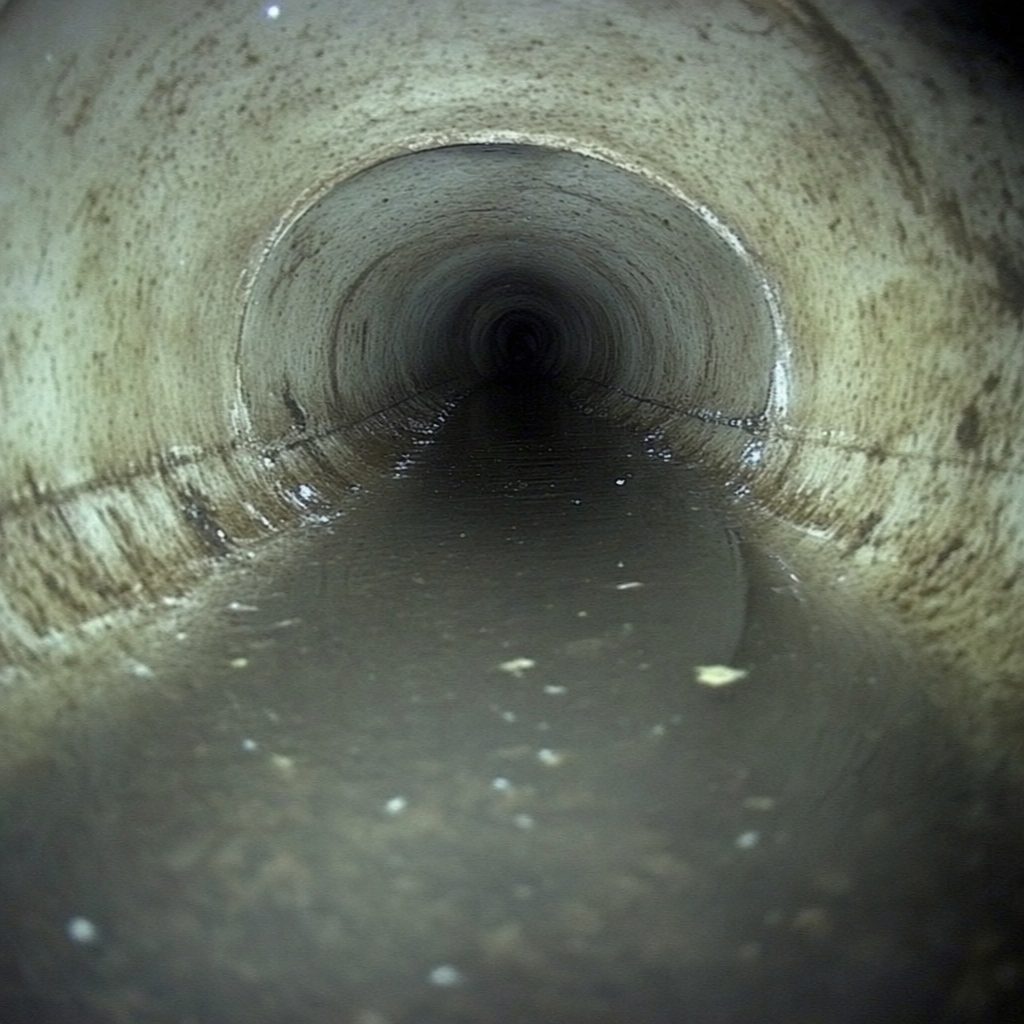
A belly in the line. A low section holding water. It will keep catching waste until it is corrected.
A belly in the line A low section holding water. It will keep catching waste until it is corrected.

Questions we get asked

Who is this written for?

Homeowners in Ogden and the surrounding Northern Utah towns who want to understand a recommendation before agreeing to it.

Does this apply to my property?

Generally, though the specifics depend on the age of the house and what its lines are made of. We would want to see it before saying anything for certain.

Not sure if this is what you have?

Tell us what the drain is doing. We will tell you what usually causes that pattern before you commit to anything.

What is the drain doing?

What is the drain doing?

Worth saying up front. If the pipe turns out to be healthy, we will tell you that. We do not turn a drain cleaning call into a sewer replacement pitch.

Backing up right now? (801) 643-5784

What we do when the pipe is fine

No fault found

Sometimes the camera goes down a line that has backed up three times and finds nothing wrong with the pipe. Grease, or roots at one joint, or a fixture that was never vented properly. The pipe itself is sound.

When that happens we clean it properly, tell you what caused it, and leave. That is the whole visit. A recurring clog is not evidence that a sewer needs replacing, and we are not going to say it is.

Tell us what the drain is doing

Describe the symptom and we will tell you what usually causes it. If it needs a look, we will come and look.

No call-out pressure and no sewer replacement pitch. If cleaning is the fix, cleaning is what we quote.

HoursMonday to Saturday, 7am to 7pm
Based inOgden, Utah
License #14290593-5501
Call Check my symptom