Skip to content
(801) 643-5784 (801) 643-5784

Guide

Why Drains Back Up in Winter

Cold changes how grease behaves, how ground moves, and how much water a household puts through the line.

Check my symptom (801) 643-5784

Drains and sewers only

Not a plumbing company with a drain page. This is the whole job.

A camera on recurring calls

If a drain has backed up before, guessing at it twice is not a plan.

Northern Utah homes

Cast iron, clay lateral, hard water scale, roots. The local failure modes.

Grease behaves differently when it is cold

It sets harder and faster in a cold line than in a warm one. A kitchen drain that copes in July can start catching in January without anything else having changed.

Ground movement

Freeze and thaw cycles move soil, and soil movement can open a joint that was previously holding or worsen an existing belly.

More water going through the house

People are indoors, showering more, running the washing machine more, and hosting. Higher volume finds a marginal line faster.

Actual freezing is rarer than people think

Buried sewer lines sit below the frost line in most local properties. The exception is a shallow run or an unheated crawl space, which is worth knowing about before winter rather than during it.

The kitchen line specifically

Cold ground makes grease set faster and harder. A kitchen branch that has been marginal all year is most likely to fail in the coldest weeks, which is also when the house is busiest.

What to do about it before winter

If a line has given trouble in previous winters, dealing with it in autumn is considerably easier than dealing with it in February with guests in the house.

Holidays are part of it

A house with visitors puts several times its normal volume through the same pipe over a few days. A marginal line copes with ordinary use and fails under that, which is why the last week of December is reliably busy.

What is worth doing in autumn

If a line gave trouble last winter, dealing with it before the cold arrives is cheaper and considerably less disruptive than dealing with it during. The problem does not improve over the summer, it just stops being noticeable.
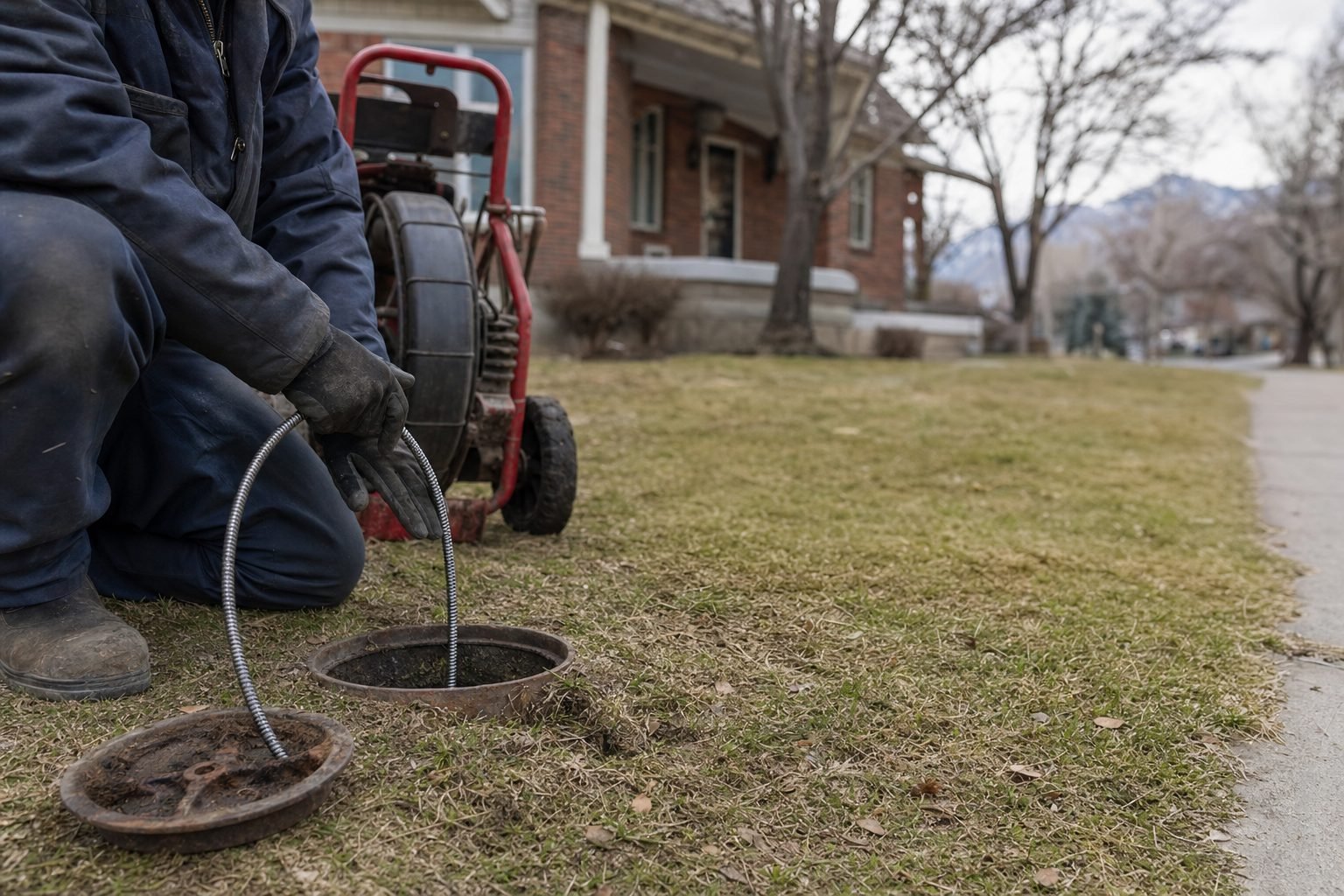
A drain technician feeding a cable into an open sewer cleanout in the front lawn of an older Ogden home.

Look first. Then clear it.

Most drain calls run the same four steps. The order matters: everything we recommend comes after we have seen the line, not before.

  1. 01

    Ask

    What is the drain doing, which fixtures are affected, how old is the house, has it happened before. Five minutes on the phone usually narrows it to two possibilities.

    You get a straight answer about whether this needs a visit.

  2. 02

    Look

    On anything recurring, the camera goes in before the cable does. We find where the restriction is and what is causing it.

    You watch the same screen we do.

  3. 03

    Clear

    Cable, jetter or descaler, chosen for what we actually found. Grease gets cut out, not punched through.

    The line is open, and the cause is gone with it.

  4. 04

    Show

    A second camera pass after the work, so you can see the pipe you are left with, including when the answer is that nothing is wrong with it.

    You know the condition of your line, not just that the water moved.

What the camera actually shows

You watch the same screen we do. These are the three things we find most often behind a drain that will not stay clear.

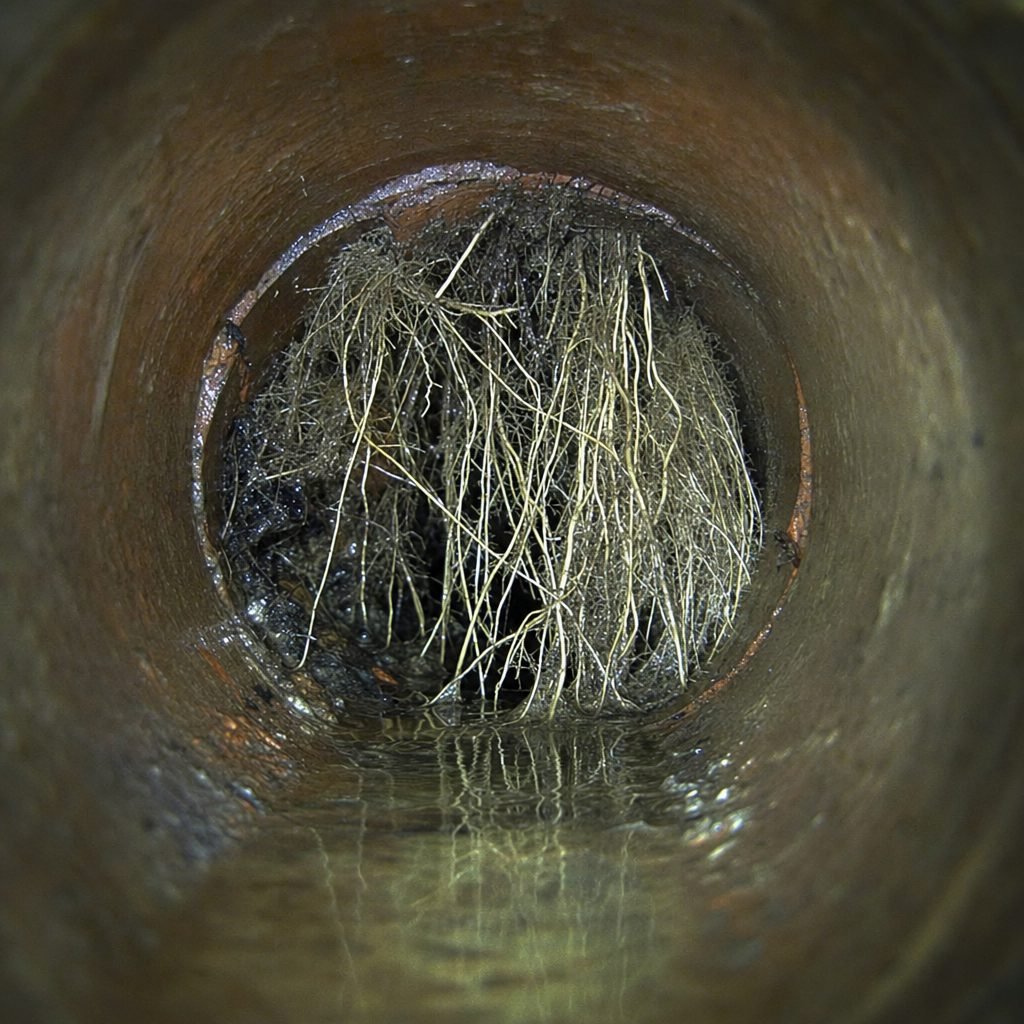
Root intrusion. Roots at a clay joint. Common under mature trees on Ogden's older streets.
Root intrusion Roots at a clay joint. Common under mature trees on Ogden's older streets.
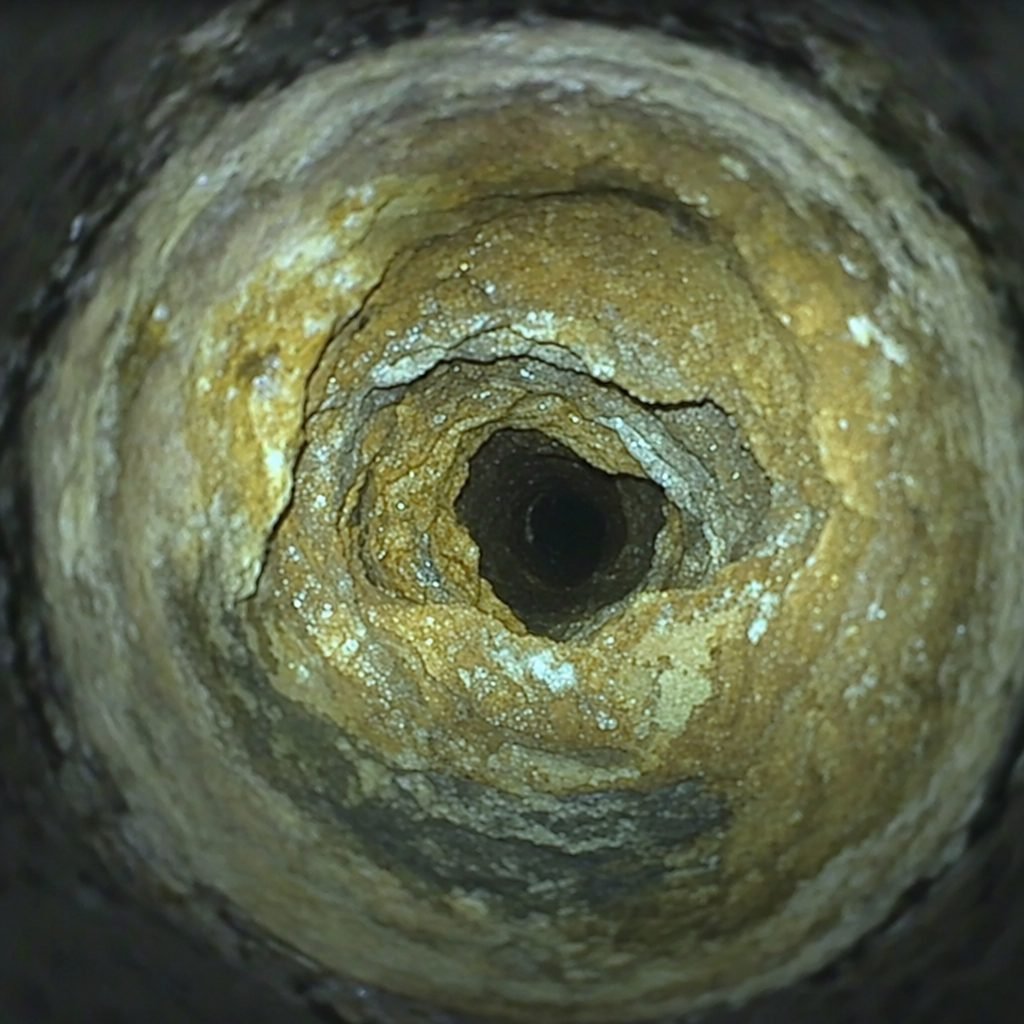
Mineral scale. Cast iron closed down by hard water scale. Regularly mistaken for a clog.
Mineral scale Cast iron closed down by hard water scale. Regularly mistaken for a clog.
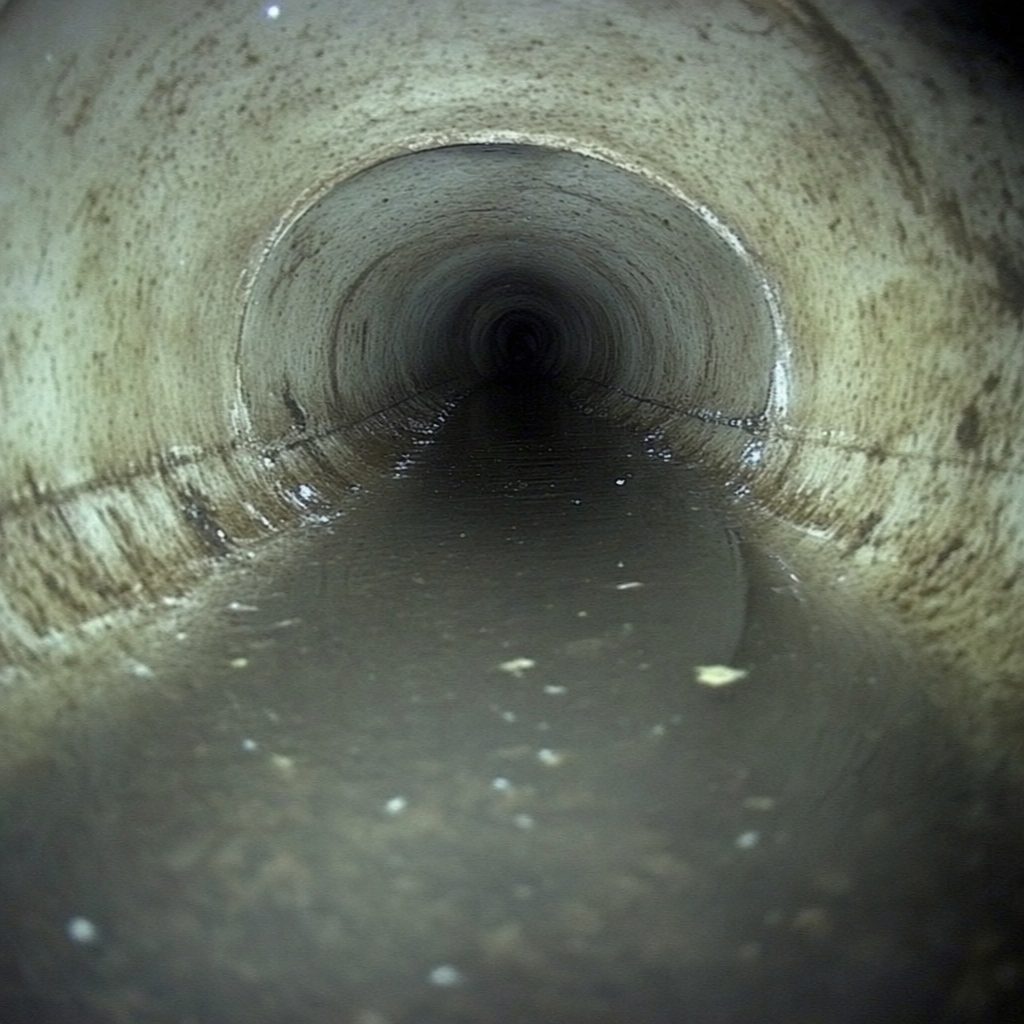
A belly in the line. A low section holding water. It will keep catching waste until it is corrected.
A belly in the line A low section holding water. It will keep catching waste until it is corrected.

Questions we get asked

Who is this written for?

Homeowners in Ogden and the surrounding Northern Utah towns who want to understand a recommendation before agreeing to it.

Does this apply to my property?

Generally, though the specifics depend on the age of the house and what its lines are made of. We would want to see it before saying anything for certain.

Not sure if this is what you have?

Tell us what the drain is doing. We will tell you what usually causes that pattern before you commit to anything.

What is the drain doing?

What is the drain doing?

Worth saying up front. If the pipe turns out to be healthy, we will tell you that. We do not turn a drain cleaning call into a sewer replacement pitch.

Backing up right now? (801) 643-5784

What we do when the pipe is fine

No fault found

Sometimes the camera goes down a line that has backed up three times and finds nothing wrong with the pipe. Grease, or roots at one joint, or a fixture that was never vented properly. The pipe itself is sound.

When that happens we clean it properly, tell you what caused it, and leave. That is the whole visit. A recurring clog is not evidence that a sewer needs replacing, and we are not going to say it is.

Tell us what the drain is doing

Describe the symptom and we will tell you what usually causes it. If it needs a look, we will come and look.

No call-out pressure and no sewer replacement pitch. If cleaning is the fix, cleaning is what we quote.

HoursMonday to Saturday, 7am to 7pm
Based inOgden, Utah
License #14290593-5501
Call Check my symptom