What hard water does below ground
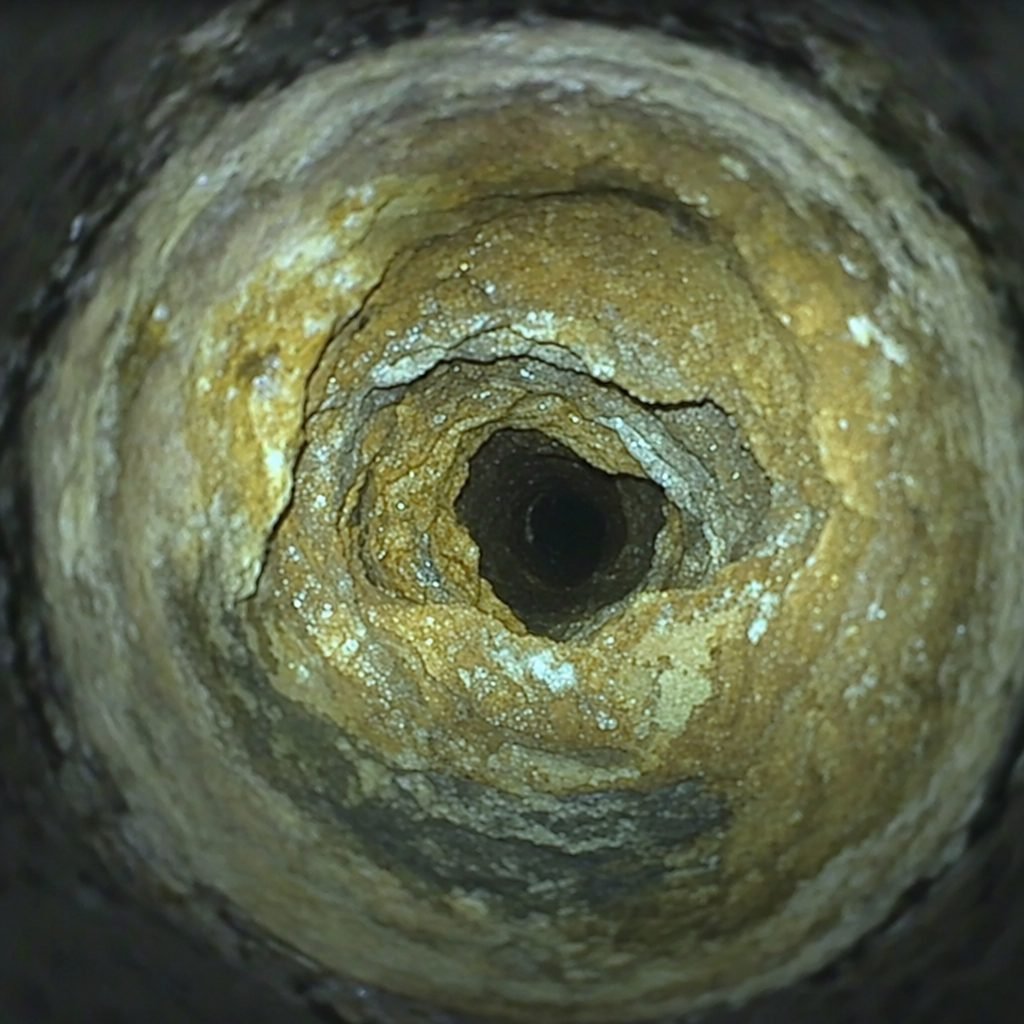
Dissolved minerals come out of solution on pipe walls and build up over years. In supply lines that shows as scale on fixtures. In drain lines, particularly cast iron, it combines with corrosion and grows inward.
Why it matters more here
Wasatch Front water is hard, and a lot of local housing is old enough for that to have had decades to act. The two together explain a great many slow drains in older Ogden and Davis County homes.
How it presents
Not as a blockage. As a drain that has been slightly slow for as long as anyone remembers, getting gradually worse, never quite failing. That gradualness is why it usually goes unaddressed until something else forces the issue.
What helps
A softener reduces what is arriving. It does not remove what has already built up, which is what descaling is for.
Why it is worse in older cast iron
Scale needs something to grip. A rough, already-corroded iron wall gives it far more purchase than smooth PVC does, which is why the same water produces a serious problem in a 1950s house and almost none in a 2010 one.
What it looks like on camera
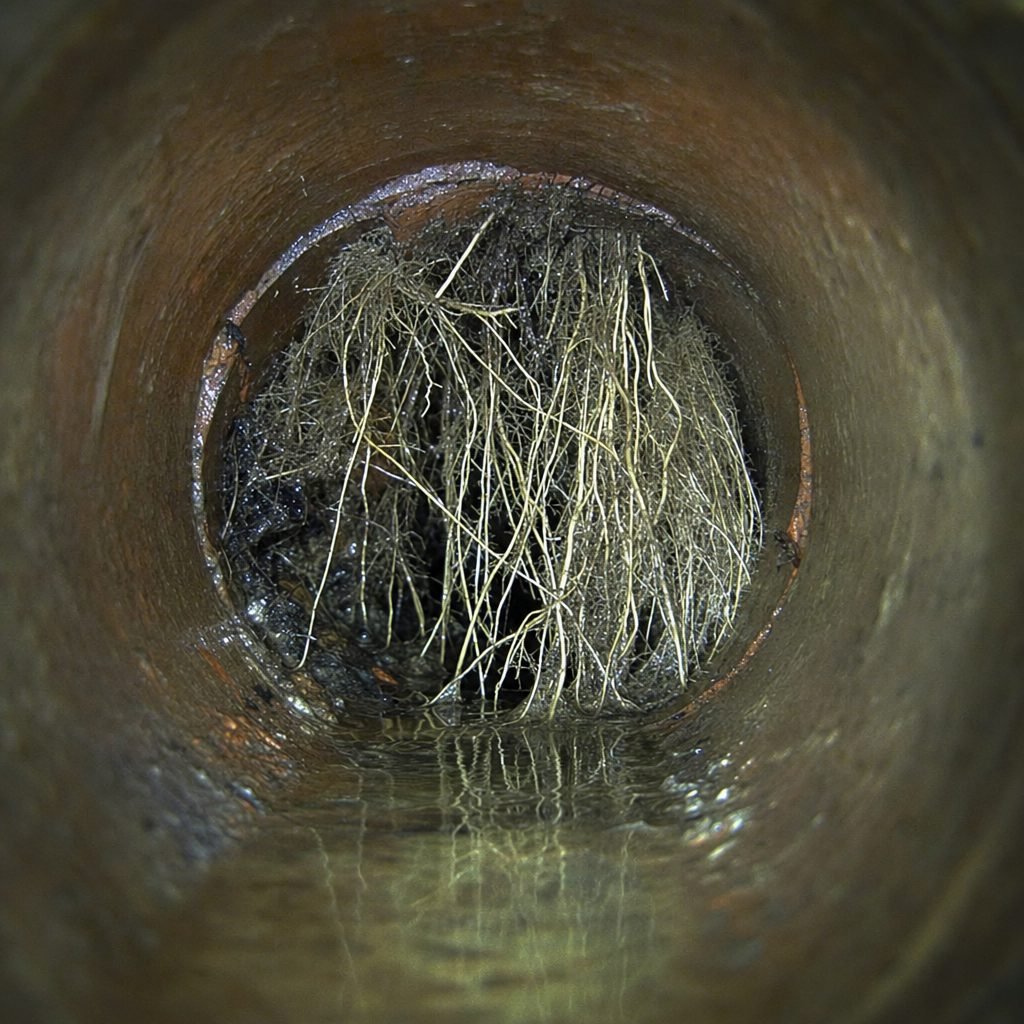
A pipe that has closed concentrically, narrowing evenly from the wall inward, rather than one with a discrete obstruction sitting in it. Once you have seen the difference it is unmistakable.
Does a softener help the drains
Indirectly and slowly. It reduces what arrives, so it slows future build-up. It does nothing to what has already formed, and it will not restore a pipe that has closed up over decades.
Why it matters more for drains than people expect
Most attention goes to what hard water does to fixtures and appliances, because that is visible. What it does to the inside of an old cast iron drain is invisible until the drain stops working properly.